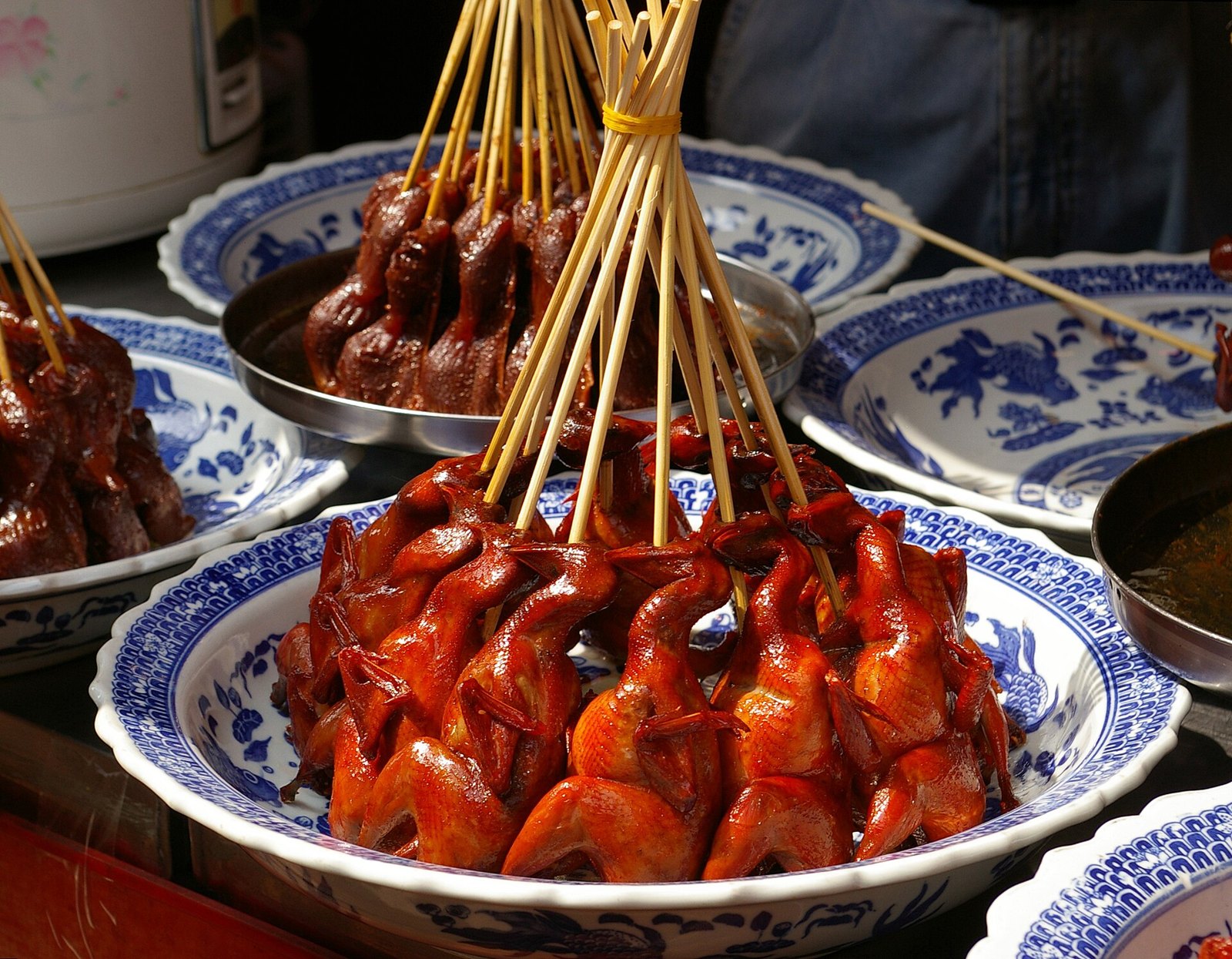
What counts as a Shanghai breakfast
A Shanghai breakfast is bought outdoors, eaten standing up, and gone in ten minutes. It usually means some combination of youtiao (fried dough stick, 油条), soy milk (doujiang), scallion pancake (cong you bing), and cifantuan. Cifantuan is glutinous rice wrapped around a youtiao and preserved vegetable. Xiaolongbao and shengjianbao also appear at breakfast counters, though both are eaten at other times and in other cities too. Our separate guide to xiaolongbao versus shengjianbao covers the difference in dough and cooking method.
None of this food requires a sit-down restaurant. Most of it comes from a cart, a window hatch, or a folding table on a side street. That is the point, and also the problem for a visitor on a hotel schedule.
The real constraint is the clock, not the food
Street breakfast stalls in Shanghai keep short, early hours. Most set up between about 5:30 and 6am and sell to a local crowd heading to work or school. They start closing once the batch runs out, often by 8:30 or 9am. This is not a tourism schedule. It is a commuter schedule, built around people who eat on the way to the metro, not people checking out of a hotel at 9.
Sixth Tone, a Shanghai-based outlet covering social change in China, has reported on the shrinking number of these informal breakfast stalls as rents rise and licensing tightens. The trend makes timing even less forgiving than it once was, according to that reporting; see Sixth Tone’s coverage of everyday urban life in China.

A neighborhood-by-neighborhood rule
Whether a visitor can actually get real street breakfast depends on where they are staying and what time they leave the room. The table below is a rule of thumb, not a directory. Specific stalls open, close, and move too often for any website to track reliably.
| Area | Street-stall reality | Fallback after about 8:30am |
|---|---|---|
| Old City lanes near Yu Garden (Yuyuan) | Scattered stalls in backstreets, gone by mid-morning | Packaged snacks in the tourist-facing bazaar streets |
| Jing’an Temple area | A few lanes behind the main road still run carts before about 7:30am | Chain breakfast counters and hotel buffets |
| Former French Concession (Xintiandi, Tianzifang) | Thin on genuine stalls; gentrified early | Cafes and bakeries, open from around 7am |
| Residential districts further out (parts of Hongkou, Yangpu) | Denser stall activity, surviving later into the morning | Local chain branches, convenience stores |
| Hotel districts near Lujiazui and the Bund (Waitan) | Almost none; commercial rents priced stalls out years ago | Chains such as Yonghe Dawang, hotel breakfast service |
The pattern holds across the city. The closer an area sits to a cluster of international hotels, the earlier genuine street breakfast disappeared. It has also been replaced more completely by chains and cafes that open later and stay open longer.

What this means for a visitor’s actual morning
Anyone wanting the street version, not the chain version, needs to be outside and walking by about 7am. Anyone leaving a hotel after 8:30am, in most central areas, is choosing between a chain counter, a hotel buffet, or a bakery, not a street cart. Neither option is inferior food; they are simply different products on different clocks.
Paying for it
Street stalls are cash-poor by habit now, not by rule. Most run on Alipay or WeChat Pay QR codes stuck to the cart, and increasingly carry no change at all. Setting up Alipay or WeChat Pay with a foreign card before arrival removes the single biggest obstacle to buying anything from a cart rather than a shop. Our guide to whether cash still works in Shanghai covers where paper money still gets accepted and where it does not.
Getting to a breakfast lane early also means using the metro before the morning crowd peaks, and tapping correctly matters. Our explainer on how to pay for the Shanghai metro covers the tap-in, tap-out requirement that catches first-time users out. The network is run by Shanghai Shentong Metro Group; operating details and service notices are published on the operator’s own site. If the plan involves a late finish and an early breakfast the next day, it’s worth checking when the metro actually stops running. Lines close hours before most restaurants do.

Reading the wider city on the same logic
The breakfast clock is one version of a rule that applies across Shanghai: what’s authentic and what’s convenient often run on different timetables, in different places, for different reasons. The same logic shows up in our coverage of food and drink generally, and in how the city’s free museums work. They are genuinely free, per our piece on what is genuinely free in Shanghai, but still gated by advance booking rather than a queue. For getting around the city at whatever hour breakfast demands, see our Getting Around archive.
Access Shanghai is an independent guide. See how this site is written and checked for more on our sourcing.
Access Shanghai is an independent guide written from published, checkable sources. We have not visited the places described here and we do not publish personal recommendations or invented ‘local favorites’ — where something is singled out as notable, we say who says so. Opening times, fares, closures and prices change at short notice, so treat everything here as a starting point and confirm with the museum, operator or venue directly before building a day around it. We give no advice on visas, insurance, health or safety; use your own government’s official guidance for those.
Featured image: Photo by Jakub Hałun, source, CC BY-SA 3.0
