This is the section that decides how your trip goes
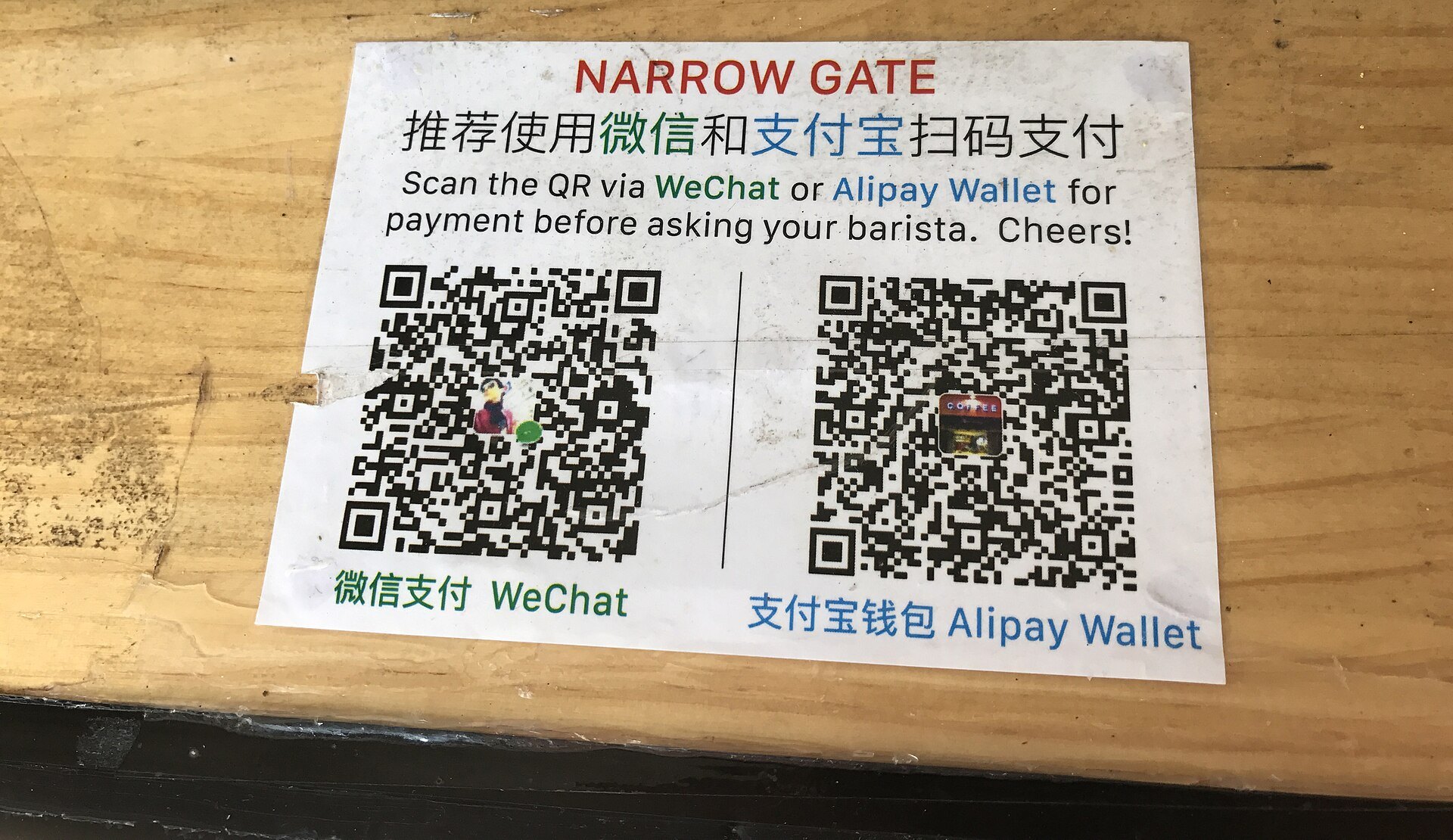
Shanghai is a nearly cashless city that runs on two apps. Get them working and almost everything
else is easy; arrive without them and you will spend the week finding out which things quietly
require one.
Both have supported international credit and debit cards since 2023, and this is the single most
useful change for visitors in a decade. Install one — ideally both — before you fly,
verify your identity while you still have easy internet, and link a card.
Between them they pay for the metro, taxis, museum reservations, train tickets, restaurants,
convenience stores and market stalls. ⚠️ Verification can take a day or two and sometimes fails on
a first attempt, which is exactly why it should not be done at the airport.
Refusing cash is against the rules in China and the central bank has said so repeatedly, so a
shop must accept your notes. In practice a small stall may have no change, and the transaction is
slower and more conspicuous than tapping a phone. Carry some, expect not to need it.
⚠️ Foreign cards work in some ATMs and not others. Bank of China and ICBC machines at airports
and major branches are the reliable ones.
⛔ The internet is not the internet you are used to
Google — including Maps, Gmail and Drive — along with WhatsApp, Instagram, Facebook, X and a
great many news sites are not reachable from inside mainland China. This surprises
people who knew it in the abstract and had not thought through what it means for a trip planned
entirely in Google Docs.
Practical consequences, in order of how much they will annoy you:
⭐ Google Maps is unusable. Download an offline map before you go, and use a
local mapping app — Amap and Baidu Maps both have some English.
Your email may not load. Set up an alternative or check whether your provider is reachable.
⚠️ Anything two-factor that depends on a blocked service can lock you out.
Check how your bank and your email verify you before you travel.
⚠️ International roaming routes through your home network, which is why many
visitors find their phone works normally. That is a real and legal solution — but it is expensive,
and it stops working the moment you buy a local SIM.
Getting online
An eSIM bought before departure is the simplest answer for most visitors and
often routes internationally. A local SIM is cheaper for a longer stay and requires your passport.
Hotel and café wi-fi is everywhere and frequently wants a Chinese mobile number to authenticate —
another reason to sort connectivity before you need it.
The four apps worth having
Alipay or WeChat — payment, and much else besides.
DiDi — taxis, with an English interface.
Amap or Baidu Maps — because Google Maps will not load.
A translation app with a camera mode, downloaded for offline use. Pointing it
at a menu is the single most useful thing a phone does here.
Google, Gmail, WhatsApp, Instagram, Facebook and X do not load in mainland China. That is not a signal problem — it is a national firewall, filtering by domain, and retrying does not fix it. The real risk is not a missing app. It is any login that sends its code through one of those blocked … Read more
Alipay and WeChat Pay now accept foreign Visa, Mastercard and JCB cards directly. You add the card inside the app, confirm your identity with a passport photograph, and the wallet works within minutes. What most guides skip is what happens next. Foreign-card wallets carry lower spending caps than a Chinese bank account does, and specific … Read more







.jpg)
