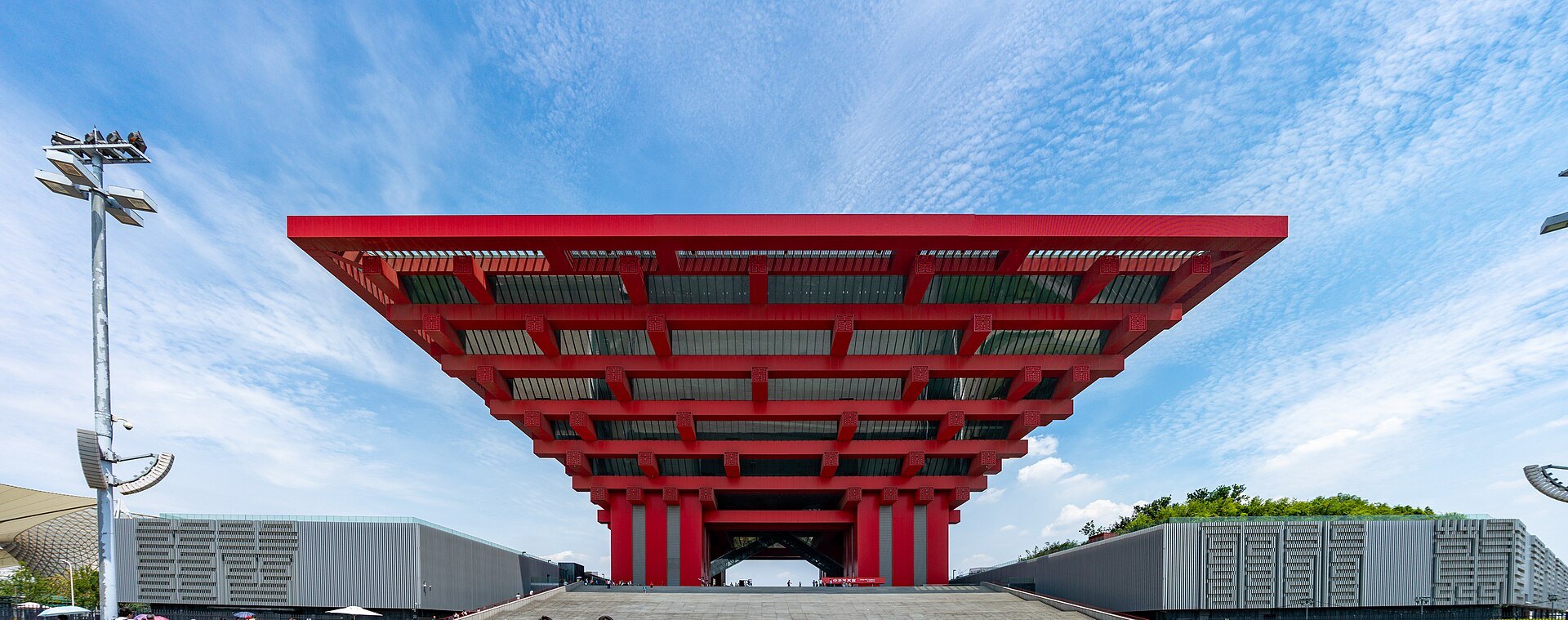

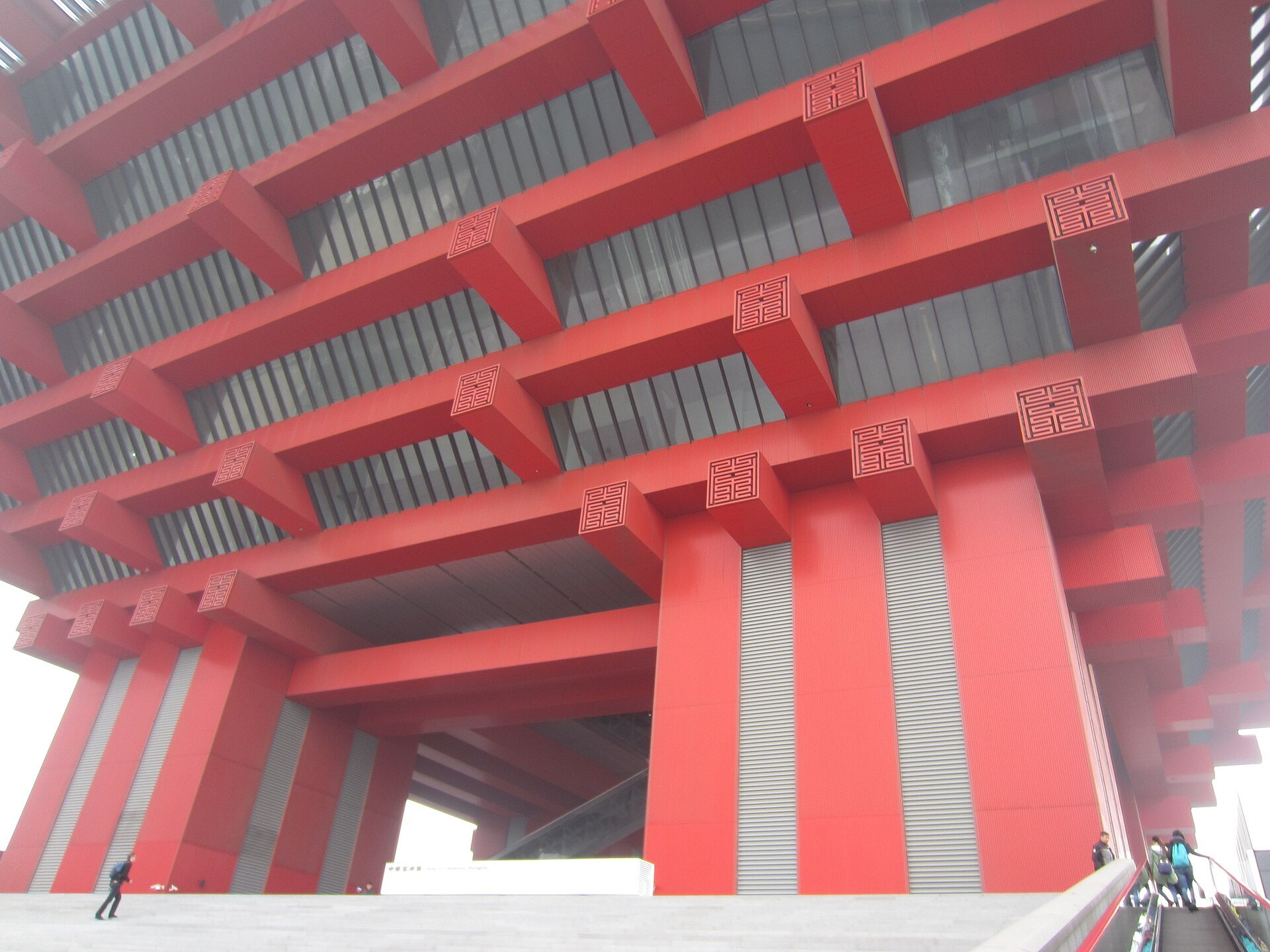
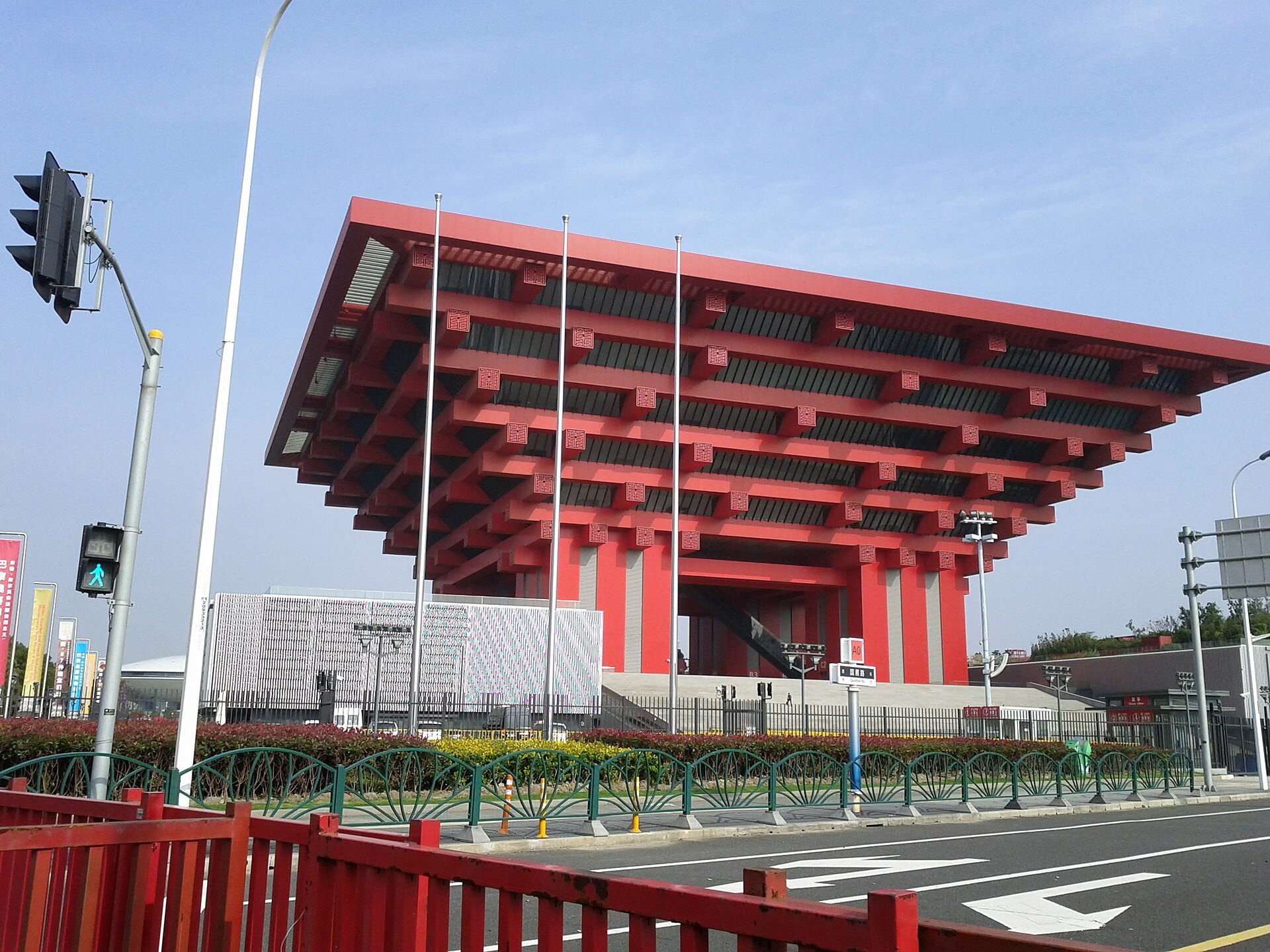
The China Pavilion from the 2010 World Expo, kept when everything around it was demolished and reopened in 2013 as a museum of modern Chinese art. It is an inverted red pyramid on massive brackets — a vastly enlarged version of the interlocking timber joint used in traditional Chinese roofs, done in painted steel.
It is the largest art museum in Asia by floor area, and the building is the exhibit most people come for.
What it costs
⭐ Free, with a reservation and your passport. Special exhibitions are ticketed.
⭐ Set your phone up before you land. Alipay and WeChat both now take foreign cards, and between them they pay for the metro, taxis, tickets, museums and almost every shop and stall. Booking a museum slot, hailing a car or buying a train ticket without one of them is genuinely difficult. See Money & Your Phone.
When to go
Closed Mondays. It is very large and never feels crowded.
_-_02.JPG)
Getting there
China Art Museum station on line 8 — the station is named after it and comes up at the foot of the building.
_-_05.JPG)
If you only have an hour
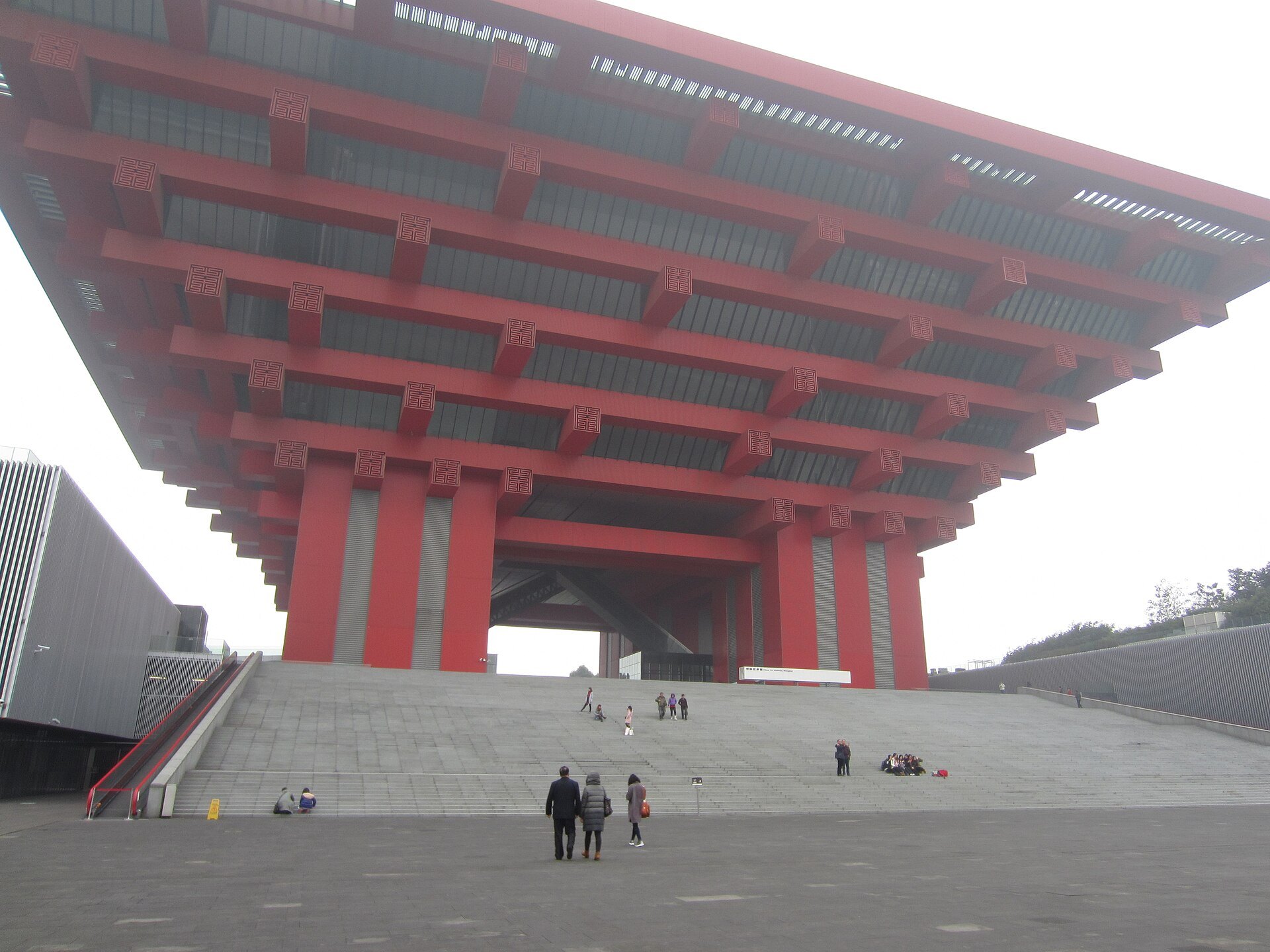
Walk around the outside first and stand underneath it, because the scale only reads from below. Then the permanent galleries of twentieth-century Chinese painting.
⭐ The animated version of Along the River During the Qingming Festival — the twelfth-century scroll, projected as a moving thirty-metre panorama — is usually here and is genuinely worth the trip on its own.
What people get wrong
Assuming the whole Expo site is still there. It is not; this pavilion and a handful of others survived and the rest is ordinary city.

Nearby
Ticketing arrangements, closing days and boat timetables as published and checked on 6 September 2026. These change without much warning — confirm with the place itself before you travel. More sights, and how they fit together, in Landmarks & Sights.